A business deals with many customers every day. Keeping their names and phone numbers is only the beginning.
Employees may also need to know what a customer enquired about, which service they are interested in, and what was discussed previously.
When this information is scattered across spreadsheets, phones, and messages, finding the right details becomes difficult.
CRM software helps businesses maintain customer information in a more organised way.
Why Do Businesses Need Organised Customer Records?
Imagine a customer contacts your company about a service. A few days later, they call again and ask for an update.
The employee answering the call cannot find the earlier enquiry details. The customer has to explain everything again.
This situation can happen when customer information is not maintained properly.
Organised records help employees understand customer requirements without repeatedly asking for the same information.
They also make it easier to continue conversations when another team member handles the customer.
1. Keep Customer Information Organised
Customer details often come from different sources.
Some people call your office, while others send WhatsApp messages or submit website enquiries. Their information may end up in different files and devices.
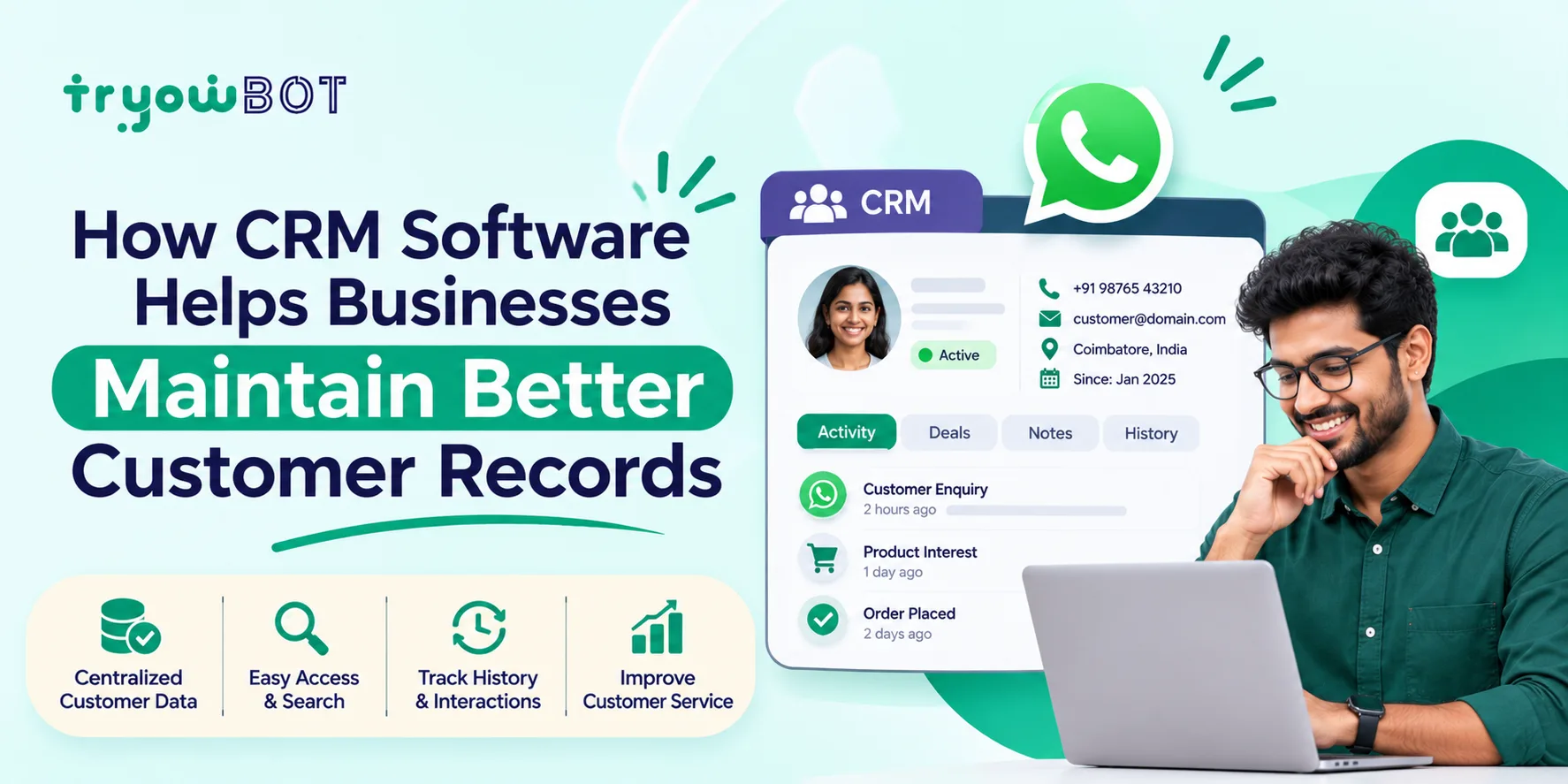
A CRM system provides a structured place to maintain customer and lead details.
Depending on the information your business collects, records may include:
- Customer name.
- Contact number.
- Email address.
- Enquiry details.
- Service or product interest.
- Relevant notes.
When information is organised, employees can find customer details more easily.
2. Understand What Each Customer Needs
Not every customer contacts your business for the same reason.
A person enquiring about website development may have different requirements from someone looking for digital marketing services.
If employees only have a name and phone number, understanding the customer's needs becomes difficult.
Adding relevant enquiry details helps your team understand why the customer contacted your business.
For example, a software company can maintain notes about a customer's required features or project requirements. Employees can refer to those details during later discussions.
3. Avoid Confusion Caused by Duplicate Records
Duplicate entries can create problems in a customer database.
An employee may save a contact using a full name, while another creates a separate entry using a shortened name.
This can make it difficult to identify the correct customer record.
A few simple practices can help prevent this:
- Check whether the customer already exists before adding a record.
- Use consistent names and contact number formats.
- Enter the correct details when creating a record.
- Review duplicate entries regularly.
- Update information when customers share changes.
CRM software helps organise customer information, but employees must also follow good data entry practices.
4. Keep Track of Previous Customer Interactions
A customer's first enquiry may not be their last conversation with your business.
They might ask about pricing, request additional information, or discuss their requirements with different employees.
Without proper records, important details can get lost between conversations.
Maintaining customer interaction history helps employees refer to previous discussions.
TryowBOT CRM helps teams access available customer conversation history. This can be useful when continuing a discussion or handling a customer's next enquiry.
5. Make Customer Information Easier for Teams to Access
In many businesses, more than one employee may handle customer communication.
For example, a sales executive may speak with a customer first. Later, another team member may need to continue the discussion.
If customer information is available only with the first employee, the second person may not have enough context.
Shared customer records help teams work with the same available information.
TryowBOT CRM also supports assigning customer records to team members, helping businesses organise who handles particular customers.
6. Update Customer Details Regularly
Customer information can change over time.
Phone numbers, email addresses, requirements, and other details may become outdated.
Using incorrect information can lead to communication problems.
Businesses should make it a regular practice to:
- Correct contact details when changes are shared.
- Update customer requirements when necessary.
- Add useful notes after important discussions.
- Check records for missing information.
- Avoid keeping unnecessary duplicate entries.
A CRM provides a place to maintain customer information. Regular updates help keep those records useful.
7. Connect Customer Records With Daily Work
Customer information becomes more useful when employees refer to it during their daily activities.
For example, a sales team may check a customer's enquiry details before making a call. They may also review previous conversations before sending another message.
A CRM helps bring these customer-related details together.
With TryowBOT CRM, businesses can maintain customer records, track lead stages, manage follow-up activities, and assign records to team members.
This makes customer information easier to use during everyday business operations.
Examples of Customer Records Across Different Industries
The details a business maintains depend on its products, services, and customers.
| Business Type Customer Details to Maintain | |
| Real estate | Property interest, preferred location, budget |
| Educational institutions | Course interest, admission enquiry |
| Travel agencies | Destination, travel requirements |
| Digital marketing agencies | Required services, project details |
| Retail businesses | Product enquiries, customer requirements |
| Service companies | Service requested, enquiry details |
These examples show why businesses should maintain information that is relevant to their customer interactions.
There is no need to collect unnecessary details. Focus on information that helps your team serve customers properly.
How TryowBOT CRM Helps Maintain Customer Records
TryowBOT CRM gives businesses a structured way to manage customer and lead information.
Its customer management features help teams keep important details organised and accessible for their work.
Using TryowBOT CRM, businesses can:
- Maintain customer and lead information.
- Refer to available customer conversation history.
- Assign customer records to team members.
- Track lead stages.
- Manage follow-up activities.
- Handle WhatsApp conversations through the shared inbox.
These features help businesses maintain better records and manage customer interactions in an organised manner.
Final Thoughts
Customer records should be easy to find, understand, and update.
When information is scattered across different places, employees spend more time searching and less time helping customers.
CRM software gives businesses a structured way to maintain customer details and refer to previous interactions.
With regular updates and consistent data entry, your customer records can remain useful as your business grows.
Looking for a simple way to organise customer information? Explore TryowBOT CRM and see how it fits your customer management needs.